Master anything you learn. Do your best research with AI.

Heptabase is an intelligent, visual knowledge base built for students, researchers, and lifelong learners.

Start your 7-day trial
Heptabase Hero Video Poster
Heptabase - Top Post Badge | Product HuntHeptabase - Golden Kitty Badge | Product Hunt

Backed by top-tier investors

Y Combinator Logo
Kleiner Perkins Logo
HOF Capital Logo
Moving Capital Logo

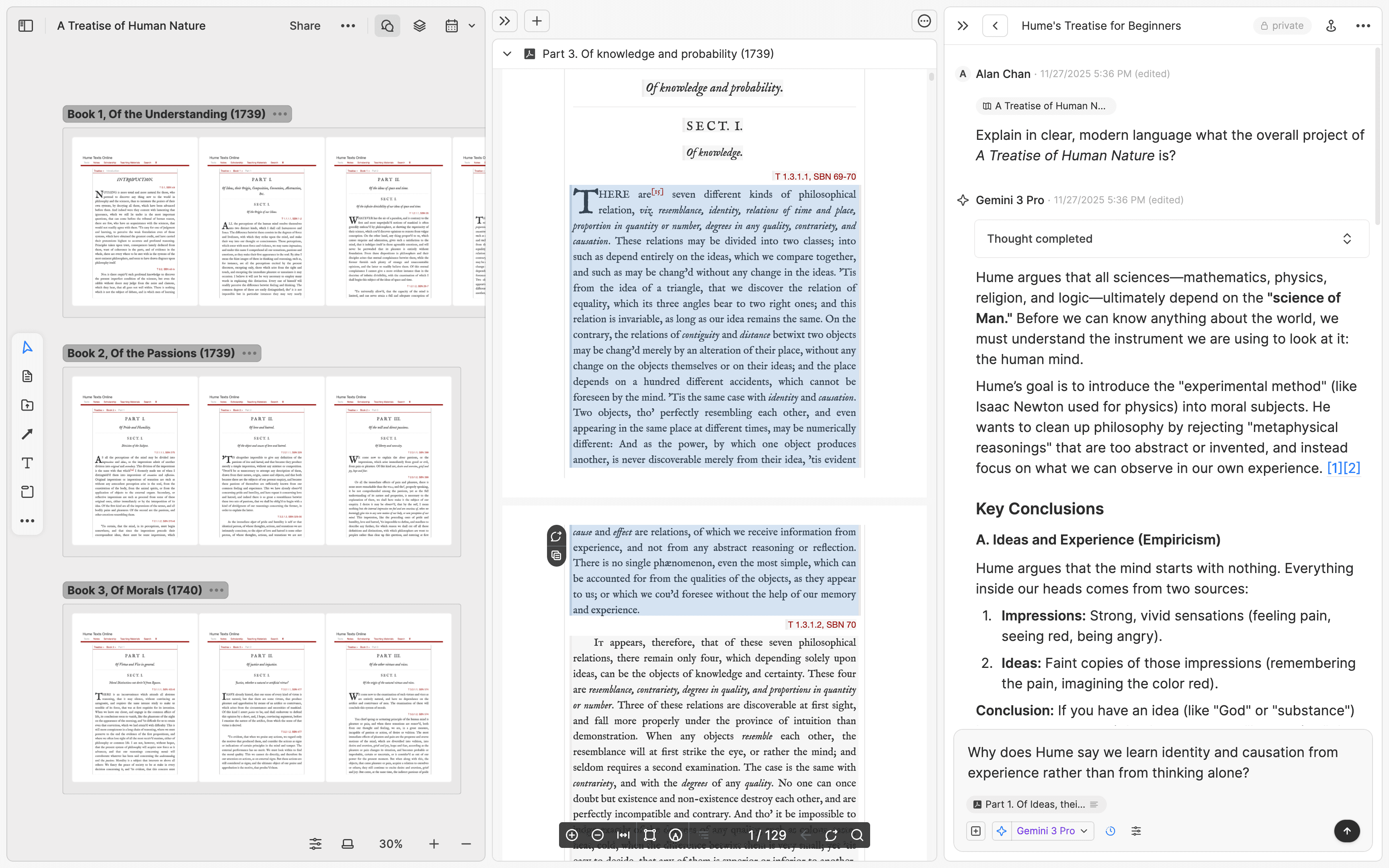
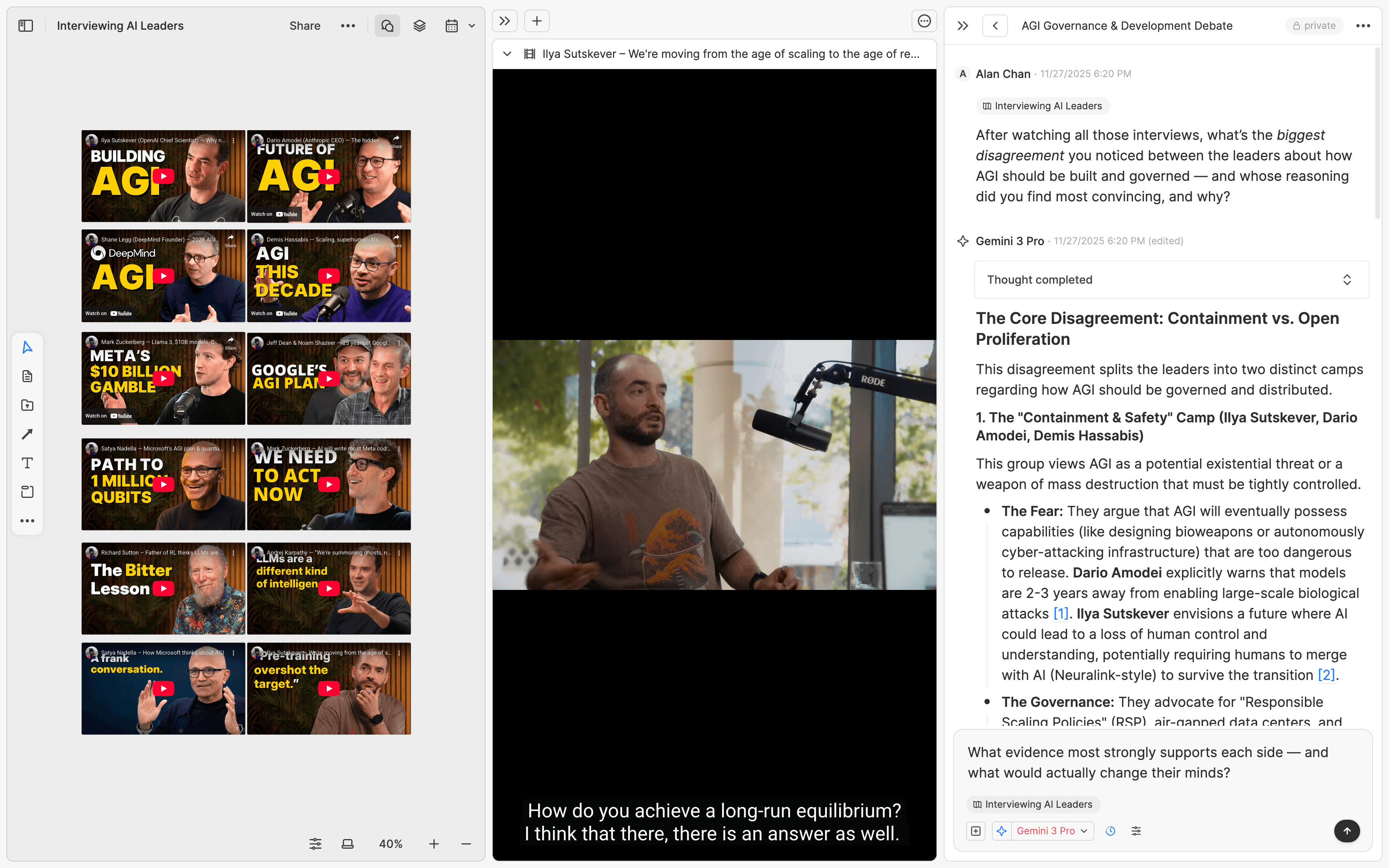
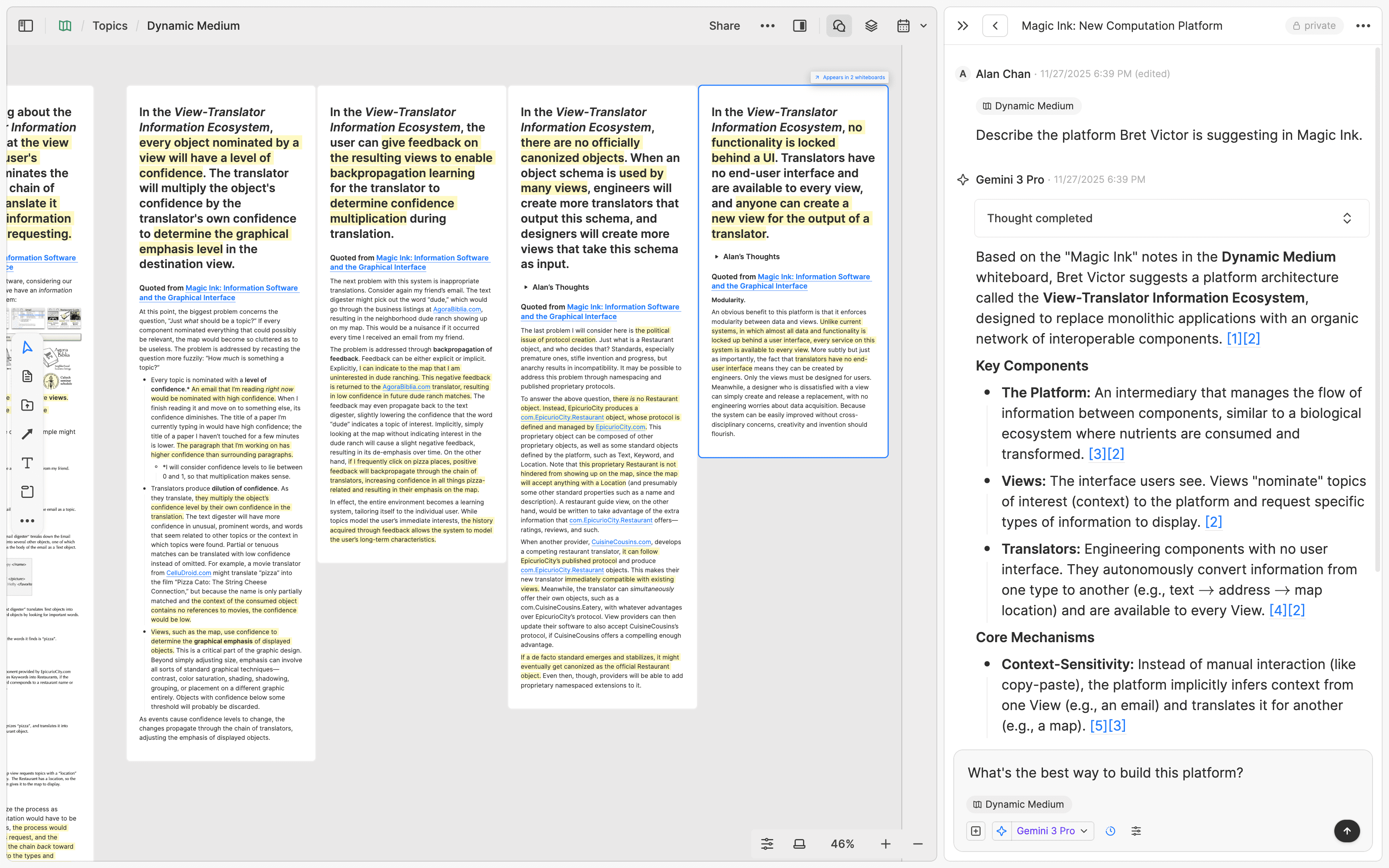
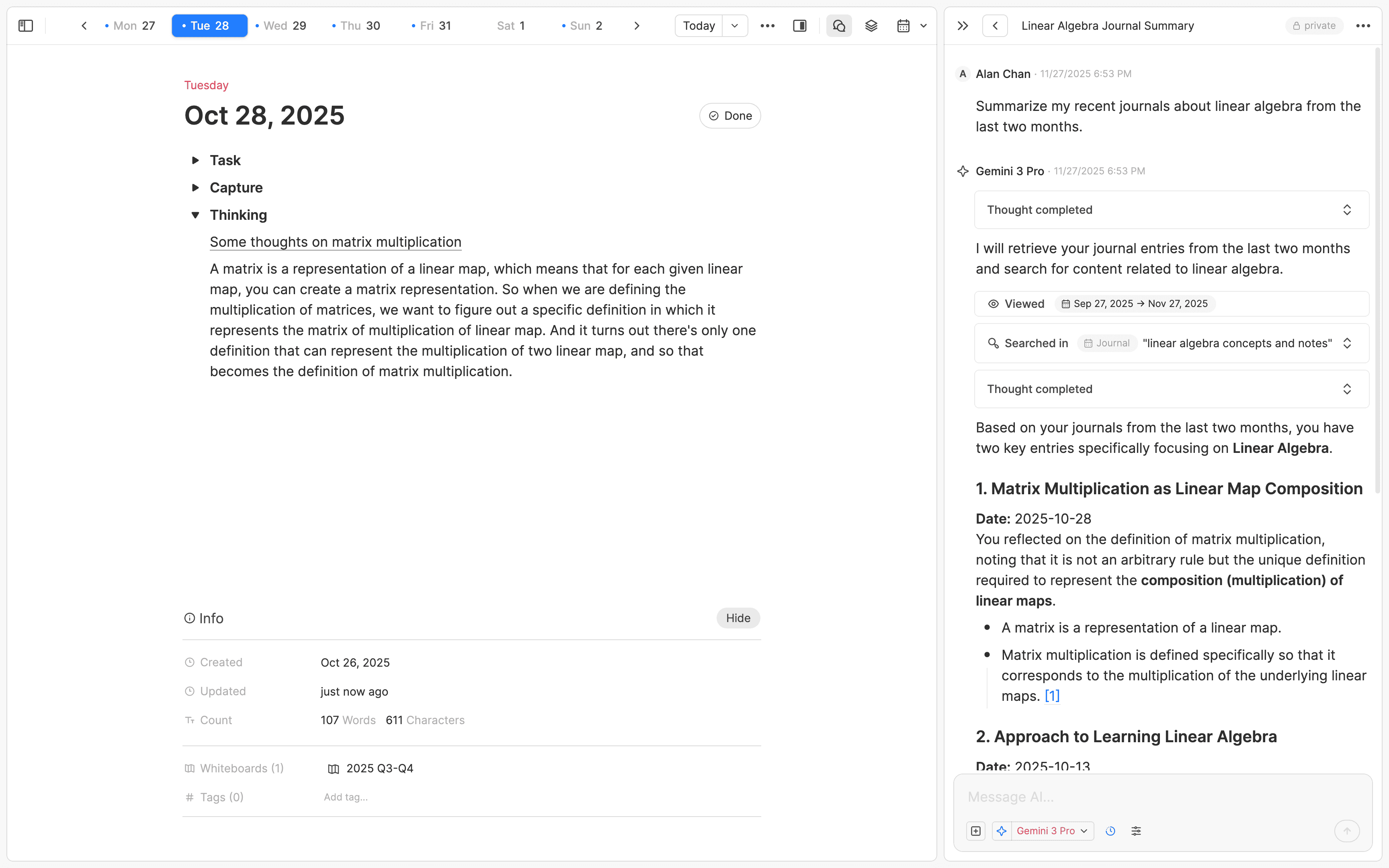
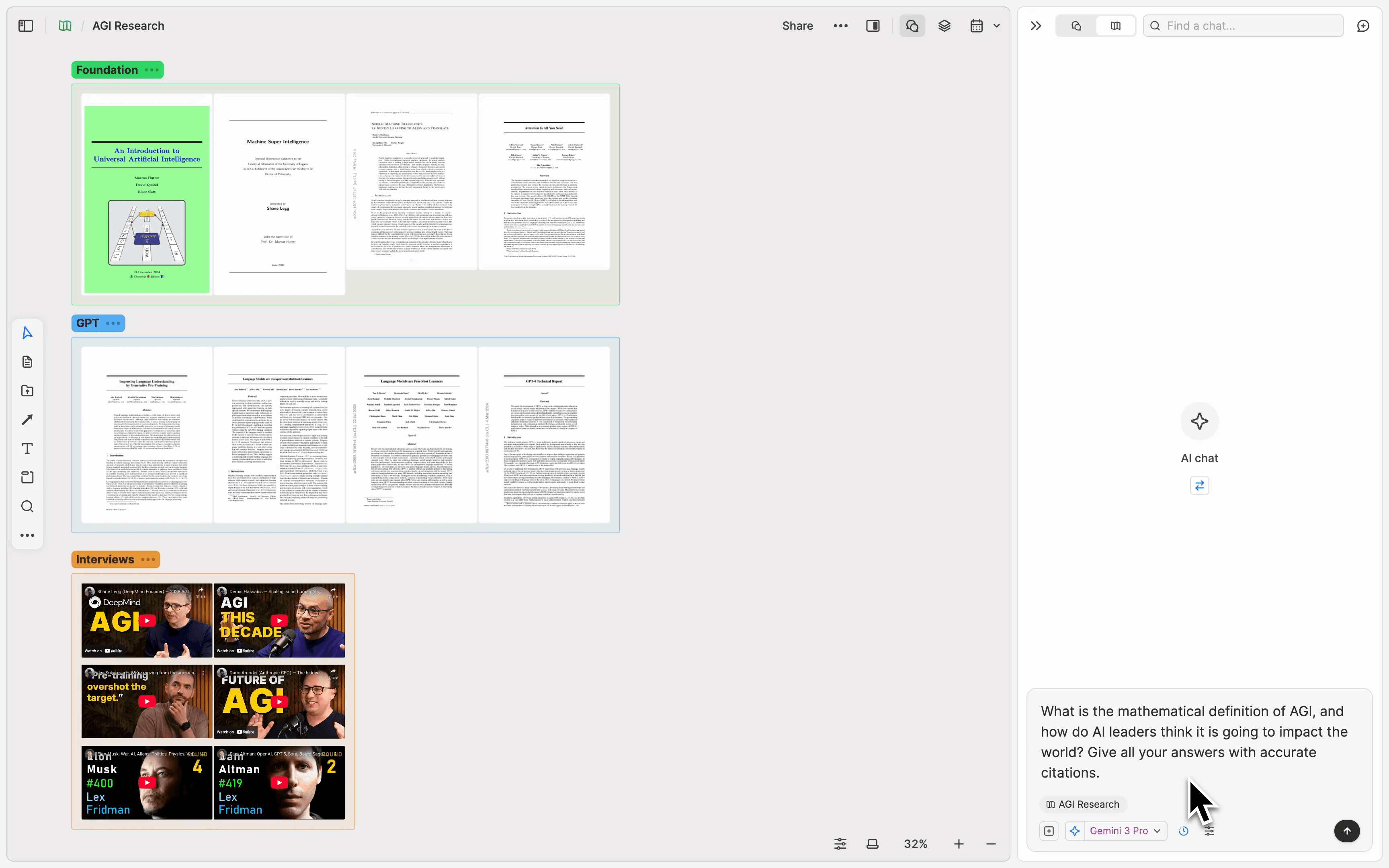
Ask AI to explain any sources you bring, and conduct research for you with citations you can trust.

AI Research with PDF - Heptabase
AI Research with YouTube - Heptabase
AI Research with Note - Heptabase
AI Research with Journal - Heptabase

Use whiteboards and cards to clarify your thinking and stay in flow.

Whiteboard feature - Visual note-taking with Heptabase

Build a connected knowledge base with all your sources, notes, highlights, and discussions in one place.

Block-Based Editor
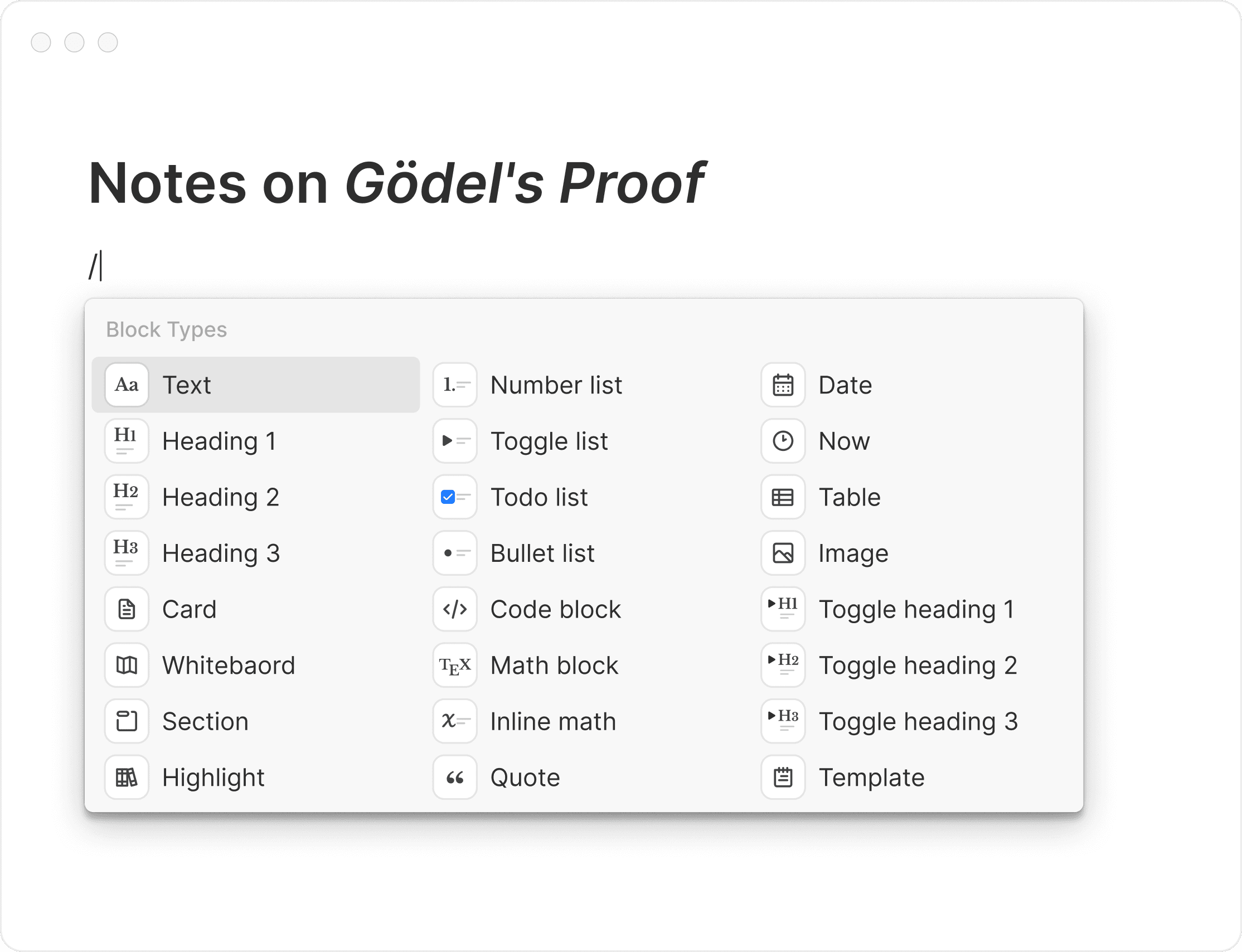
Block-based editor with slash command menu

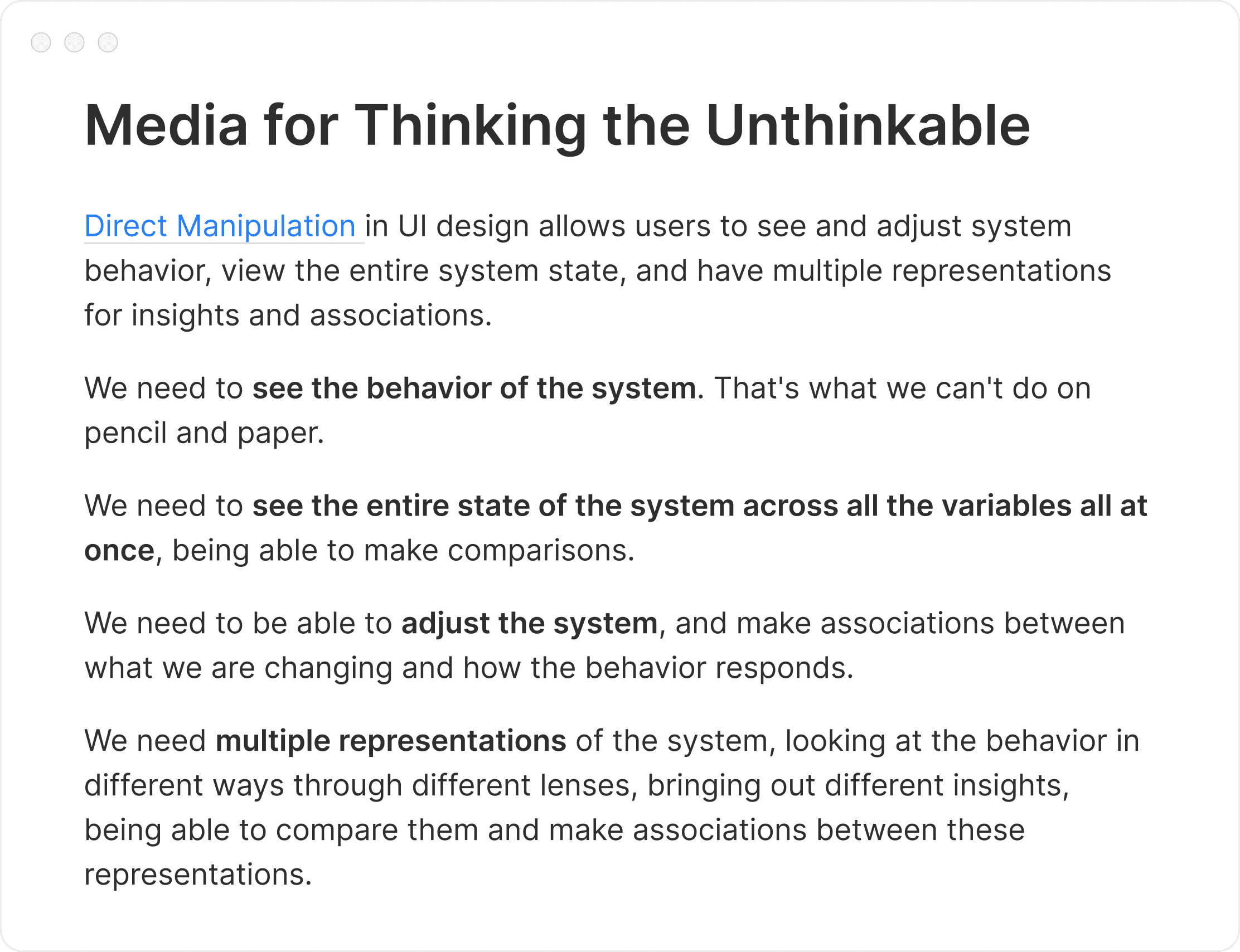
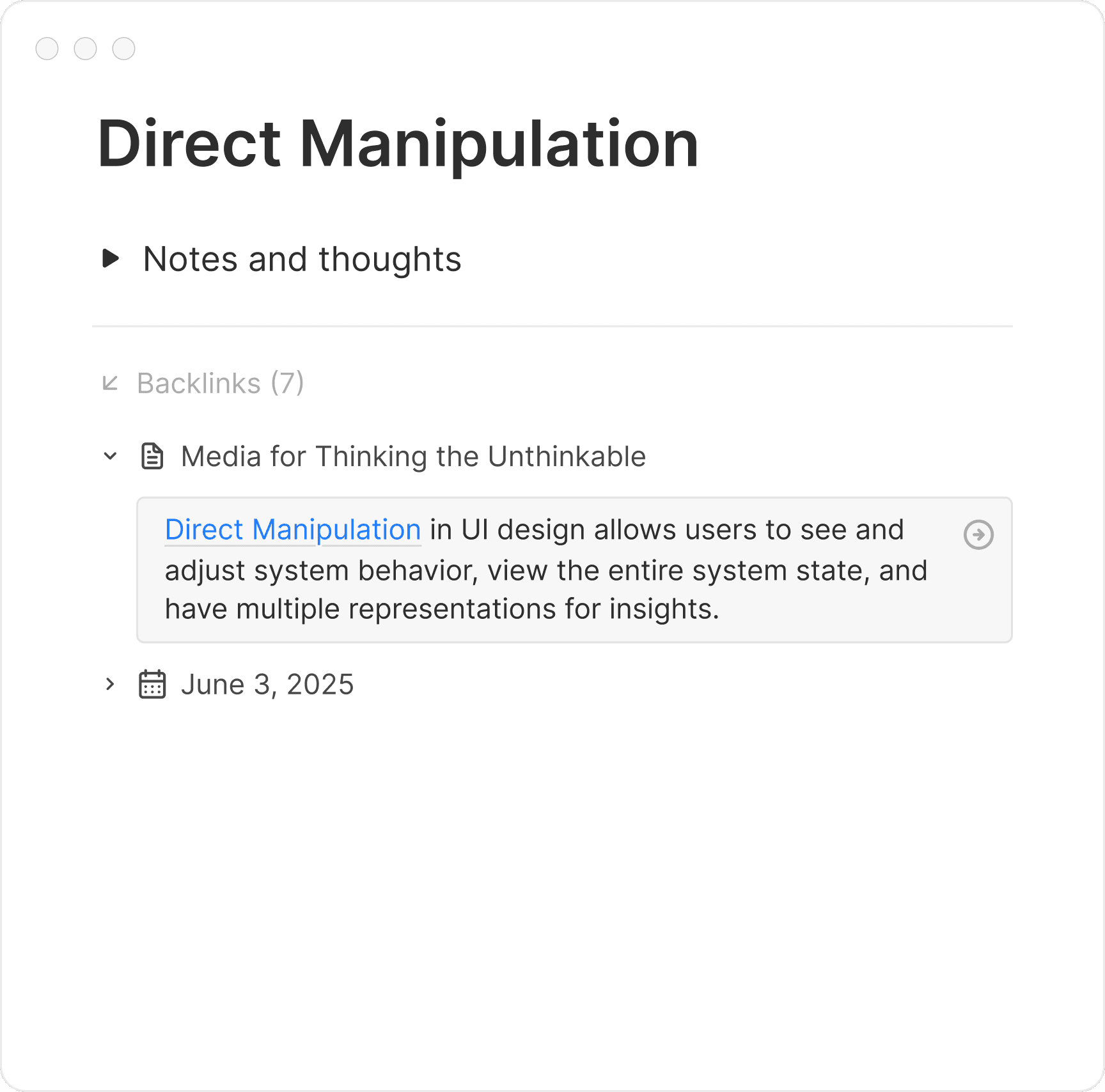
Bi-Directional Links

Backlink source note
Active note with bidirectional links

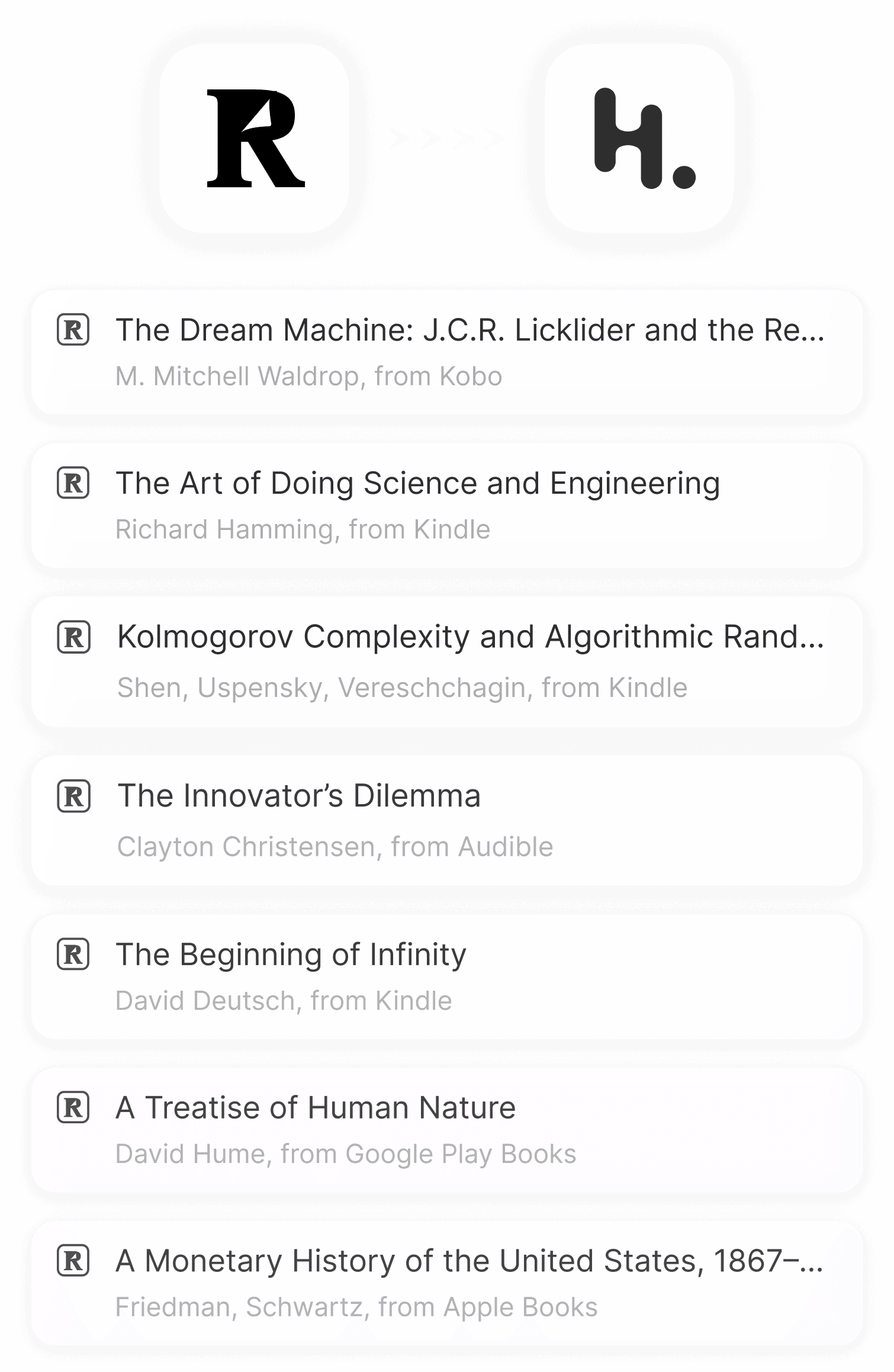
Readwise Integration

Readwise integration showing synced highlights

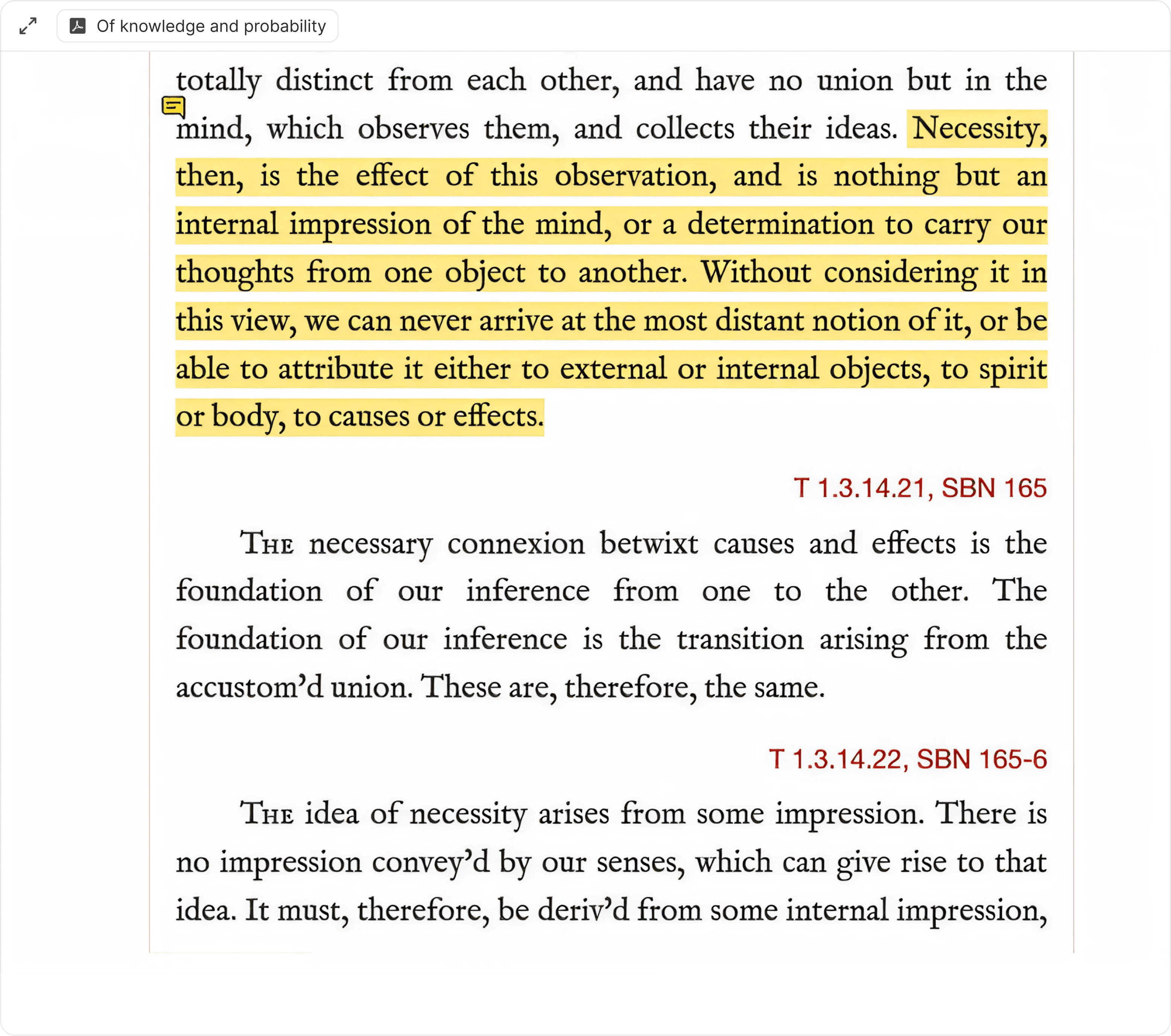
PDF Annotation

PDF annotation interface
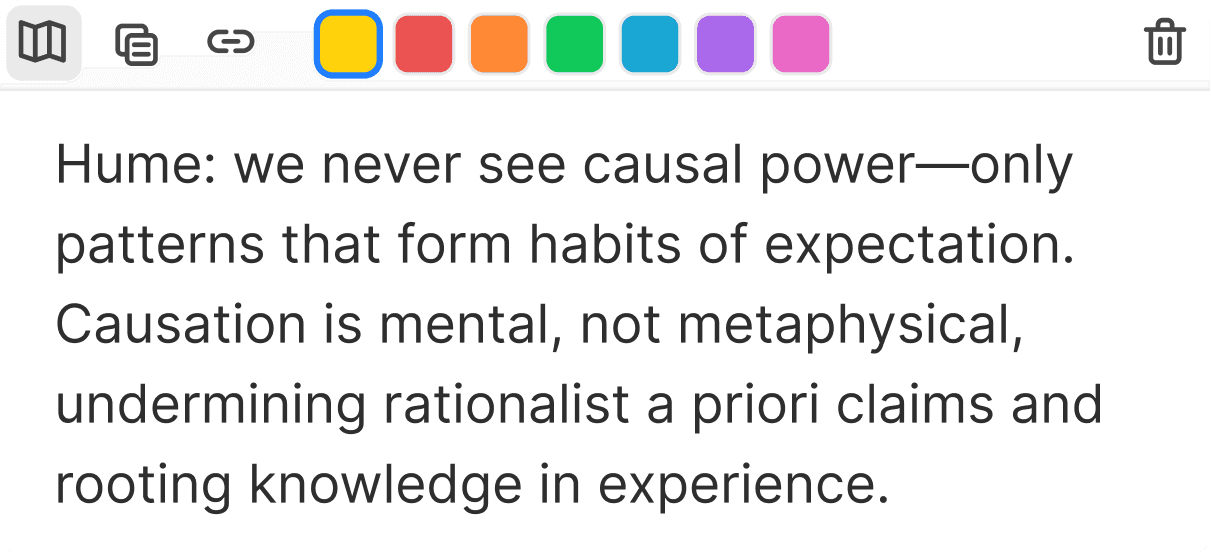
Highlight color menu

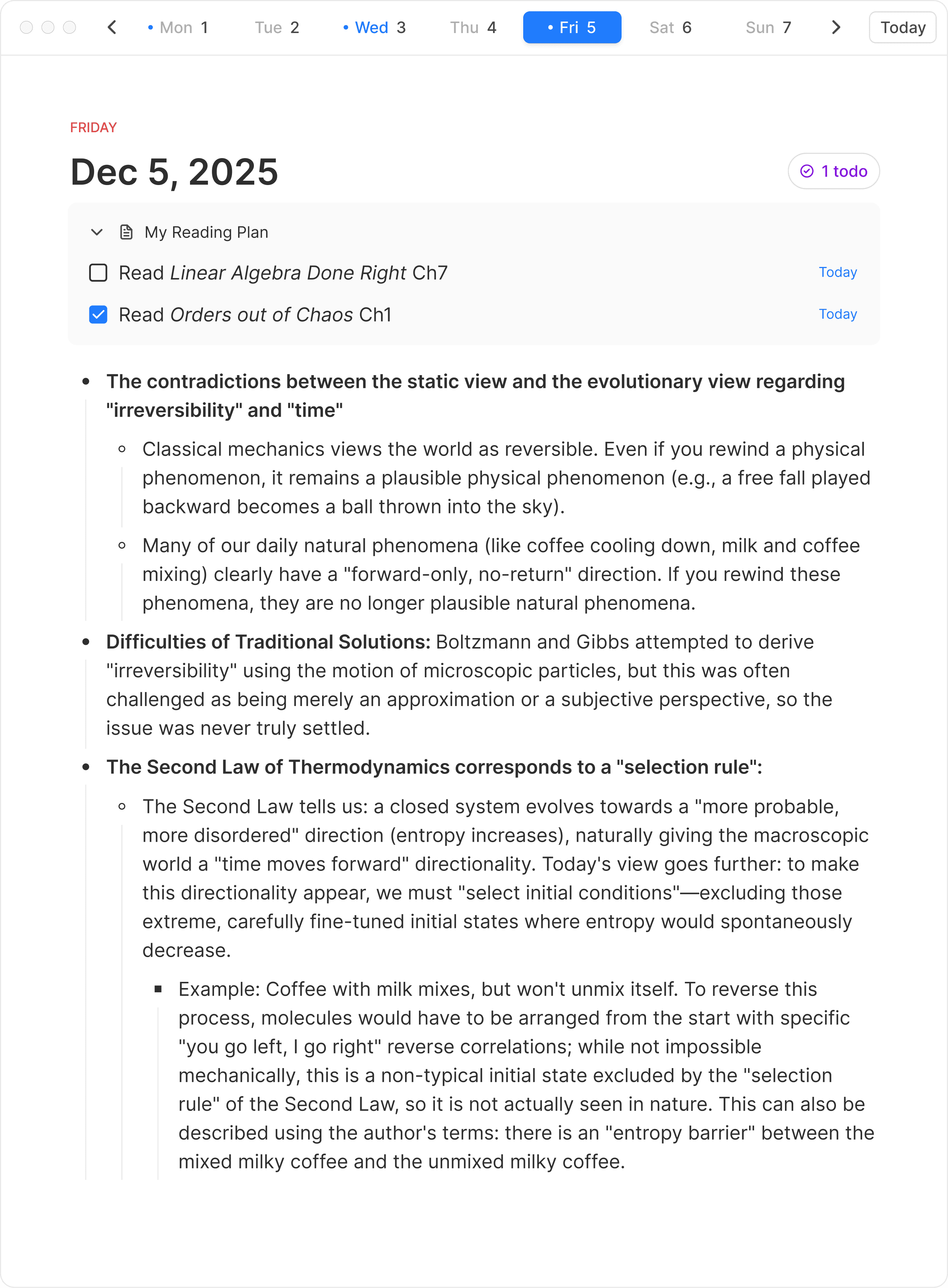
Daily Journals

Daily journals view with calendar and todos

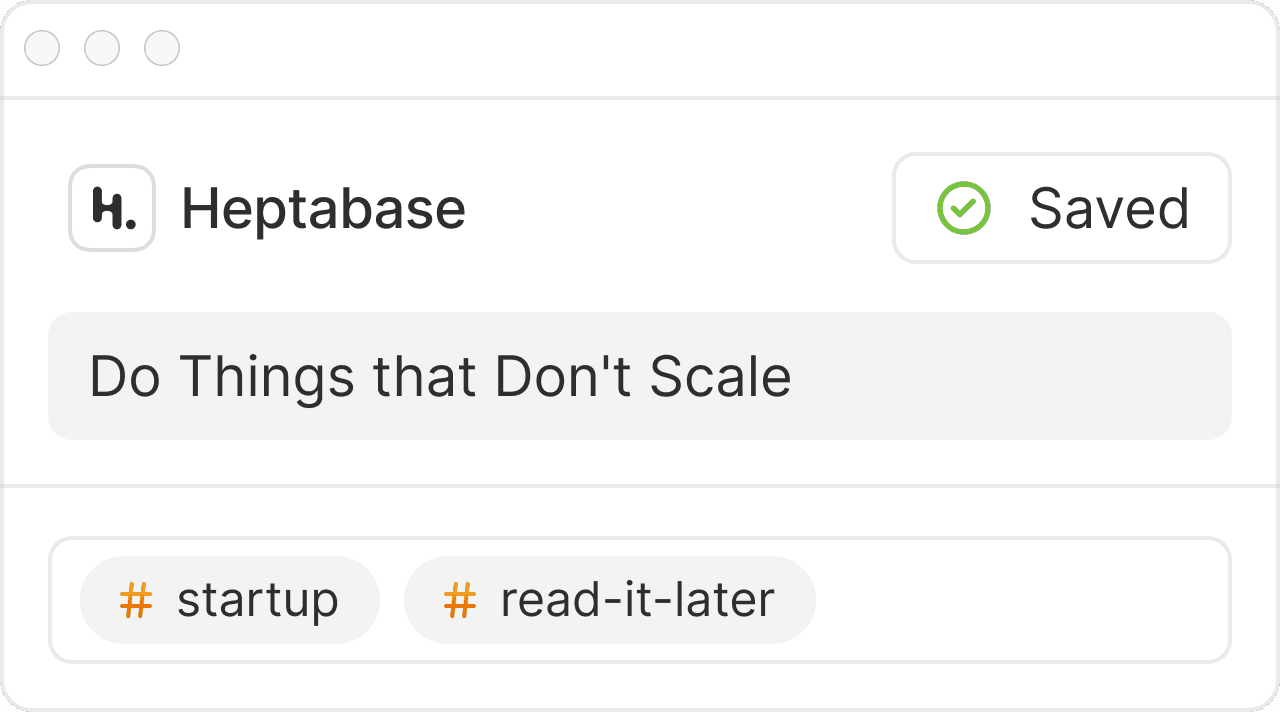
Web Clipper

Web browser background
Web Clipper popup menu

Zotero Integration

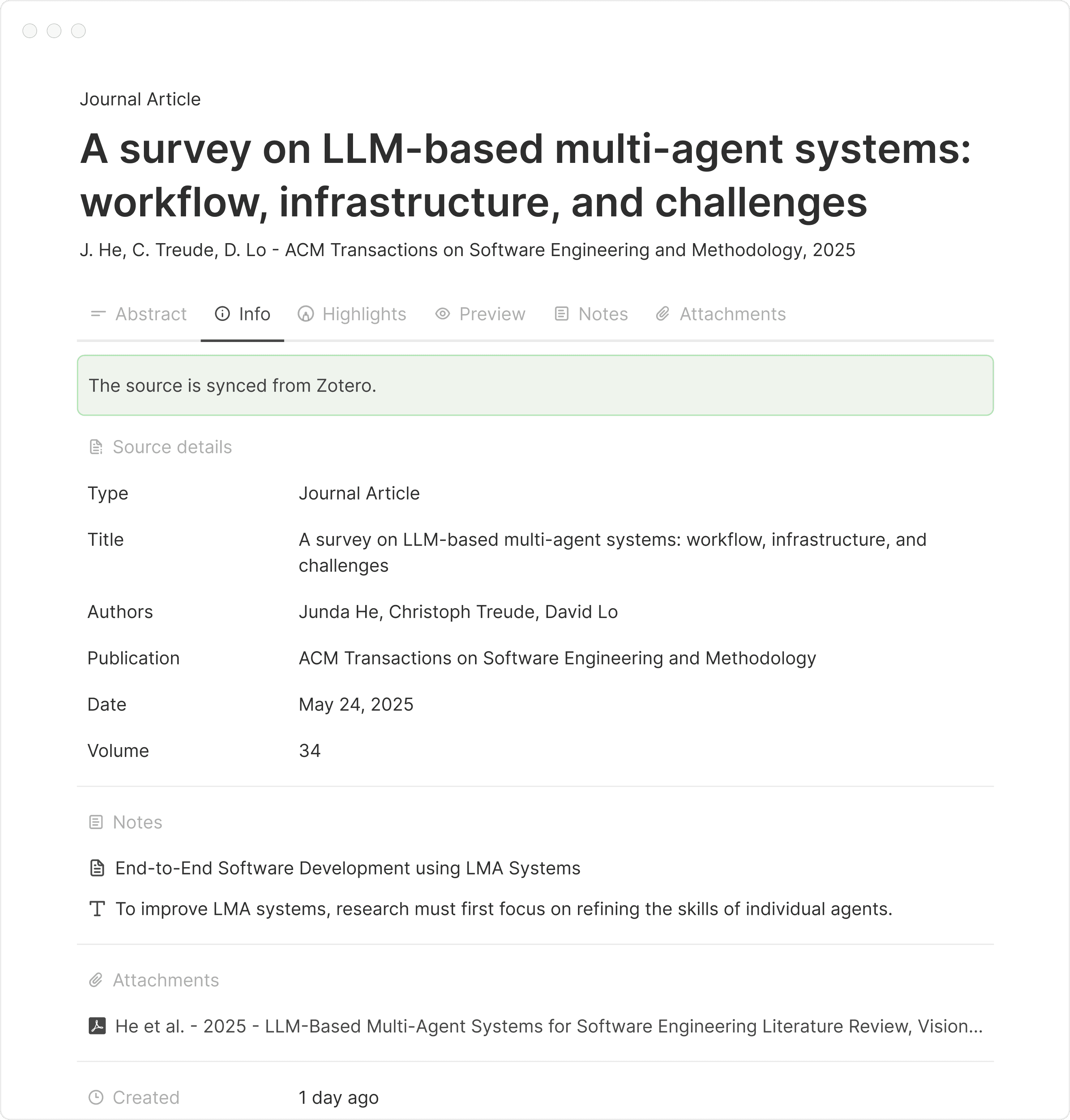
Zotero source card with article details
Agent
Coding Agent

Introducing Heptabase AI Tutor

Structured, personalized AI tutor sessions to help you achieve your goals, integrated with note-taking system.

Watch Demo
H
Sophists and Socrates
AAlan· 05/01/2026 3:47 PM

I'd like to continue this course.

Heptabase AI Tutor· 05/01/2026 3:47 PM
Thought completed
Start planning the lesson

Welcome back, Alan. You've now completed all of Topic 1 — a thorough journey through the Pre-Socratics, from Thales through the Atomists. This lesson picks up exactly where that left off, moving into Topic 2: Socrates and the Sophists.

Sophists and Socrates
Lesson page created

After nine lessons' worth of cosmology and metaphysics, this lesson marks the famous pivot — where philosophy turns from the heavens to the human being. Here's what this lesson covers:

  1. 2.1 The Sophists — who they were and why relativism genuinely threatened philosophy
  2. 2.2 Socrates vs. the Sophists — what it means to know that you don't know
  3. 2.3 The Socratic Method — how elenchus works, with a deep dive into the Euthyphro

By the end, you'll have a firm grip on what Socrates was actually doing — and why it was controversial enough to get him killed.

AAlan· 05/01/2026 3:47 PM

Looks good, let's go!

Heptabase AI Tutor· 05/01/2026 3:47 PM
Thought completed
Starting the lesson
Lesson progress
0/4 completed
The Sophists' Challenge
Socrates vs. the Sophists
The Socratic Method
Review
The Sophists' Challenge
Lesson part created

Part 1 is ready. The Sophists are presented in full — Protagoras's relativism, the epistemic threat it poses to the entire Pre-Socratic project, and Gorgias's three devastating propositions. The piece also gives the Sophists their due as genuine philosophical figures rather than mere foils for Socrates.

AAlan· 05/01/2026 3:49 PM

Continue

Heptabase AI Tutor· 05/01/2026 3:49 PM
Message AI tutor...
AI Tutor
Course syllabus

Course Syllabus: History of Western Philosophy

Topic 0: Course Introduction

An orientation to the journey ahead — what philosophy is, why its history matters, and how the topics in this course build on one another across twenty-five centuries.

0.1
Roadmap introduction
What philosophy asks, why its history is the best way to learn it, and how each era sets up the next

Topic 1: The Pre-Socratics

Philosophy begins not with answers but with a radical change in the kind of question being asked — replacing mythological explanation with reasoned inquiry into the nature of reality.

1.1
Why philosophy? The leap from myth to reason
1.2
Thales and Anaximander
the first cosmologists
1.3
Pythagoras
number as the key to reality
1.4
Heraclitus
everything flows
1.5
Parmenides
change is impossible
1.6
Zeno's paradoxes
motion, infinity, and the limits of reason
1.7
Democritus and the atomists
matter at the bottom
1.8
The Pre-Socratic legacy
what questions they left behind

Topic 2: Socrates and the Sophists

The focus of philosophy shifts from the cosmos to the human being — from "what is the world made of?" to "how should I live?"

2.1
The Sophists
teaching virtue for pay
2.2
Socrates vs. the Sophists
is virtue teachable?
2.3
The Socratic method (elenchus)
dialogue as philosophy
2.4
Socratic ethics
the unexamined life
2.5
The trial and death of Socrates

Topic 3: Plato

Plato is the first systematic philosopher and the pivot around which all of Western philosophy rotates.

3.1
Plato's dialogues as philosophical form
3.2
The Theory of Forms
the real world behind appearances
3.3
The Allegory of the Cave
knowledge and education
3.4
The Divided Line
levels of reality and knowing
3.5
The soul
immortality, recollection, and the tripartite structure
3.6
The Republic I
justice in the soul and the city
3.7
The Republic II
the philosopher-king and the ideal city
3.8
The Republic III
critiques of democracy, poetry, and the myth of Er
3.9
The Symposium
love, beauty, and the ascent to the Form of the Good
3.10
Plato's legacy
problems he leaves open

Topic 4: Aristotle

Aristotle is philosophy's great synthesizer and systematizer — he simultaneously dismantles Plato's world of separate Forms and rebuilds a richer account of substance, nature, knowledge, and the good life.

4.1
Aristotle vs. Plato
why Forms must come down to earth
4.2
Logic
the Organon and the syllogism
4.3
Categories and substance
the basic structure of reality
4.4
Hylomorphism
form and matter
4.5
The four causes
explaining why things are as they are
4.6
Potentiality and actuality
change explained
4.7
Epistemology
how we come to know
4.8
The Nicomachean Ethics I
eudaimonia and the function argument
4.9
The Nicomachean Ethics II
virtue as the golden mean
4.10
The Nicomachean Ethics III
friendship, pleasure, and the contemplative life
4.11
Politics
the polis and the political animal
4.12
Aristotle's legacy
the Philosopher who ruled the Middle Ages

Topic 5: Hellenistic Philosophy

After Alexander the Great, three great schools emerge to answer the question pressing on every individual: how do I live well in a world I cannot control?

5.1
The Hellenistic context
philosophy as therapy for a troubled world
5.2
Epicurus
pleasure, atoms, and the art of tranquility
5.3
Epicurean physics
atoms and the clinamen
5.4
Stoicism
logos, fate, and what is up to us
5.5
Stoic ethics
living according to nature
5.6
Pyrrho and Academic Skepticism
suspending judgment
5.7
Hellenistic legacy
how these schools shaped Roman thought and beyond

Topic 6: Medieval Philosophy

Medieval philosophy is where some of philosophy's sharpest problems (universals, existence, necessary being, reason vs. revelation) were fought over with great precision.

6.1
Augustine
faith seeking understanding
6.2
The problem of universals
realism vs. nominalism
6.3
Anselm and the ontological argument
6.4
Islamic philosophy
Al-Kindi, Avicenna, Averroes
6.5
Jewish philosophy
Maimonides and negative theology
6.6
Thomas Aquinas I
faith and reason in harmony
6.7
Thomas Aquinas II
the five ways and natural theology
6.8
Thomas Aquinas III
natural law and ethics
6.9
William of Ockham
nominalism and the limits of reason

Topic 7: Renaissance and Early Modern Philosophy

The Renaissance dissolves the medieval synthesis, and a new science of nature forces a complete rethinking of what knowledge is and how to get it.

7.1
The Renaissance context
humanism and the recovery of antiquity
7.2
Machiavelli
politics without morality
7.3
The scientific revolution and its philosophical shock
7.4
Francis Bacon
the inductive method and the reform of learning
7.5
Descartes I
radical doubt and the cogito
7.6
Descartes II
mind, body, and the existence of God
7.7
Descartes III
the legacy and problems of Cartesian dualism
7.8
Spinoza
one substance, God-or-Nature
7.9
Leibniz
monads, pre-established harmony, and the best of all possible worlds

Topic 8: The British Empiricists

Where the rationalists grounded knowledge in innate ideas and pure reason, the empiricists insist that all knowledge comes from experience.

8.1
What is empiricism? The core commitment
8.2
Locke I
ideas, primary and secondary qualities
8.3
Locke II
personal identity, substance, and what we cannot know
8.4
Locke III
political philosophy and the social contract
8.5
Berkeley
to be is to be perceived
8.6
Hume I
impressions, ideas, and the limits of knowledge
8.7
Hume II
causation — habit, not necessity
8.8
Hume III
the self as bundle of perceptions
8.9
Hume IV
religion, miracles, and the design argument
8.10
Hume's problem of induction
the deepest challenge

Topic 9: Kant

Kant is the hinge of modern philosophy — woken by Hume's skepticism, he attempts a complete restructuring of epistemology.

9.1
The Copernican revolution in philosophy
what Kant reverses
9.2
Analytic and synthetic, a priori and a posteriori
Kant's key distinctions
9.3
The Transcendental Aesthetic
space and time as forms of intuition
9.4
The Transcendental Analytic
the categories of understanding
9.5
The Transcendental Dialectic
the limits of reason
9.6
Phenomena and noumena
things as they appear vs. things in themselves
9.7
Kant's ethics I
the good will and the categorical imperative
9.8
Kant's ethics II
humanity as end in itself and the kingdom of ends
9.9
The Critique of Judgment
beauty, sublimity, and teleology
9.10
Kant's legacy and immediate reception

Topic 10: German Idealism and Hegel

Kant's successors eliminate the mysterious "thing-in-itself" by making reality fully rational and fully knowable — leading to Hegel and his dialectical account of history, Spirit, and freedom.

10.1
Post-Kantian idealism
Fichte and the absolute ego
10.2
Schelling
nature as visible spirit
10.3
Hegel's dialectic
thesis, antithesis, synthesis — and what it really means
10.4
The Phenomenology of Spirit I
consciousness and self-consciousness
10.5
The Phenomenology of Spirit II
the master-slave dialectic
10.6
Hegel's logic
being, nothing, and becoming
10.7
Hegel's philosophy of history
the rational is actual
10.8
Hegel's political philosophy
the rational state
10.9
Hegel's influence
why he polarizes everything that follows

Topic 11: 19th-Century Responses

Hegel's grand system provoked four of the nineteenth century's most important philosophers into furious, contrasting responses.

11.1
Schopenhauer
the world as will and representation
11.2
Schopenhauer
art, asceticism, and the denial of will
11.3
Kierkegaard
the leap of faith and the three stages of existence
11.4
Kierkegaard
subjectivity, anxiety, and authentic selfhood
11.5
Marx I
historical materialism and the critique of Hegel
11.6
Marx II
alienation, capitalism, and the critique of political economy
11.7
Nietzsche I
the death of God and nihilism
11.8
Nietzsche II
master and slave morality
11.9
Nietzsche III
the will to power, eternal recurrence, and the Übermensch
11.10
Nietzsche IV
perspectivism and the critique of truth

Topic 12: Analytic Philosophy

At the turn of the twentieth century, a new style of philosophy emerges that turns away from grand metaphysical systems toward the logical analysis of language and thought.

12.1
What is analytic philosophy? A new philosophical method
12.2
Frege
logic, sense, and reference
12.3
Russell I
logicism and Principia Mathematica
12.4
Russell II
descriptions, logical atomism, and the philosophy of language
12.5
G.E. Moore
common sense and the naturalistic fallacy
12.6
Early Wittgenstein
the Tractatus Logico-Philosophicus
12.7
Logical positivism
the Vienna Circle and the verification principle
12.8
The unraveling of logical positivism
Quine and Popper

Topic 13: Continental Philosophy

A parallel tradition turns to lived experience, embodiment, and the question of being itself — Husserl, Heidegger, Sartre, de Beauvoir, Merleau-Ponty, and Levinas.

13.1
What is continental philosophy? A different approach to the same questions
13.2
Husserl
intentionality and the phenomenological method
13.3
Heidegger I
Being and Time — the question of Being
13.4
Heidegger II
thrownness, care, and authenticity
13.5
Heidegger III
being-toward-death and temporality
13.6
Heidegger IV
technology, language, and the later work
13.7
Sartre I
existence precedes essence
13.8
Sartre II
bad faith, the look, and being-for-others
13.9
Simone de Beauvoir
existentialism and feminism
13.10
Merleau-Ponty
the phenomenology of the body
13.11
Levinas
the face of the other and ethics as first philosophy

Topic 14: Later Analytic Philosophy

The late Wittgenstein's rejection of his own early theory transforms analytic philosophy — while Quine, Rawls, and philosophy of mind take it in new directions.

14.1
Late Wittgenstein
meaning as use
14.2
Language-games, family resemblance, and following a rule
14.3
Ordinary language philosophy
Austin and Ryle
14.4
Quine
the indeterminacy of translation and the web of belief
14.5
Philosophy of mind
functionalism and the hard problem
14.6
Rawls
A Theory of Justice and the veil of ignorance
14.7
Nozick
libertarianism and the minimal state
14.8
Philosophy of science
Kuhn, Popper, and scientific revolutions

Topic 15: Postmodernism and Contemporary Thought

Foucault, Derrida, Lyotard, and Rorty each question the very foundations of the Western philosophical project — universal reason, objective truth, and grand historical narratives.

15.1
What is postmodernism? The critique of the Enlightenment project
15.2
Foucault I
knowledge, power, and archaeology of discourse
15.3
Foucault II
discipline, surveillance, and the genealogy of the subject
15.4
Foucault III
sexuality, the care of the self, and ethics
15.5
Derrida
deconstruction and the instability of meaning
15.6
Lyotard
the postmodern condition and the end of grand narratives
15.7
Rorty
pragmatism, irony, and the end of epistemology
15.8
Contemporary threads
feminism, critical theory, and analytic-continental rapprochement
15.9
Where does Western philosophy stand today?
15.10
Capstone
your own philosophical position

All the essentials, done right.

Blazing fast

Search over 10,000 notes in less than a second.

Offline access

Access all notes and files without an internet connection.

Real-time collaboration

Invite your friends and teammates to collaborate with you for free.

Mobile ready

Capture and edit your ideas on the go; voice note supported.

Designed with the best methods for learning.

Use AI for Learning

Tackle challenging knowledge with AI.
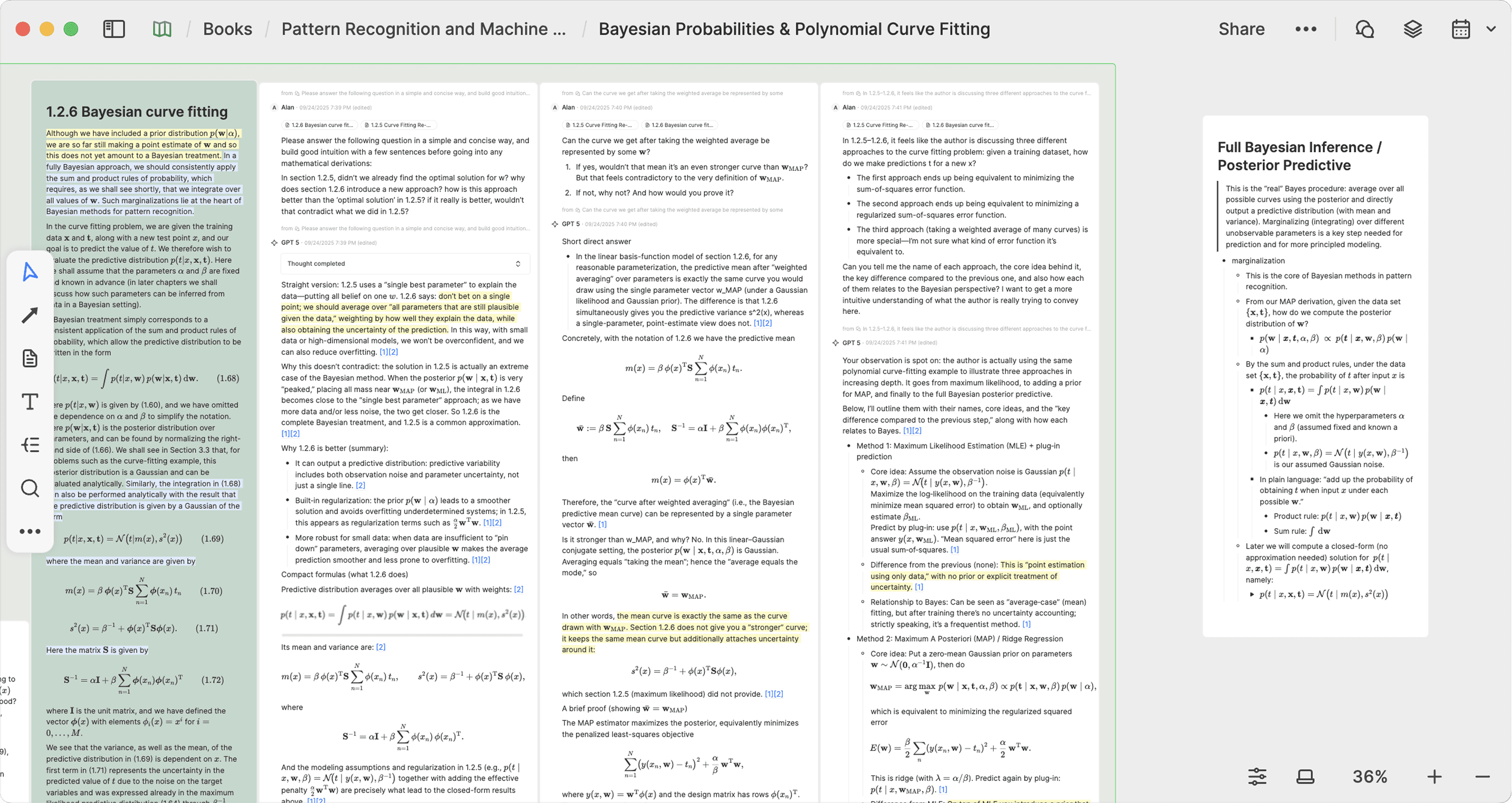
AI Learning Interface Screenshot

Acquire Knowledge from Readings

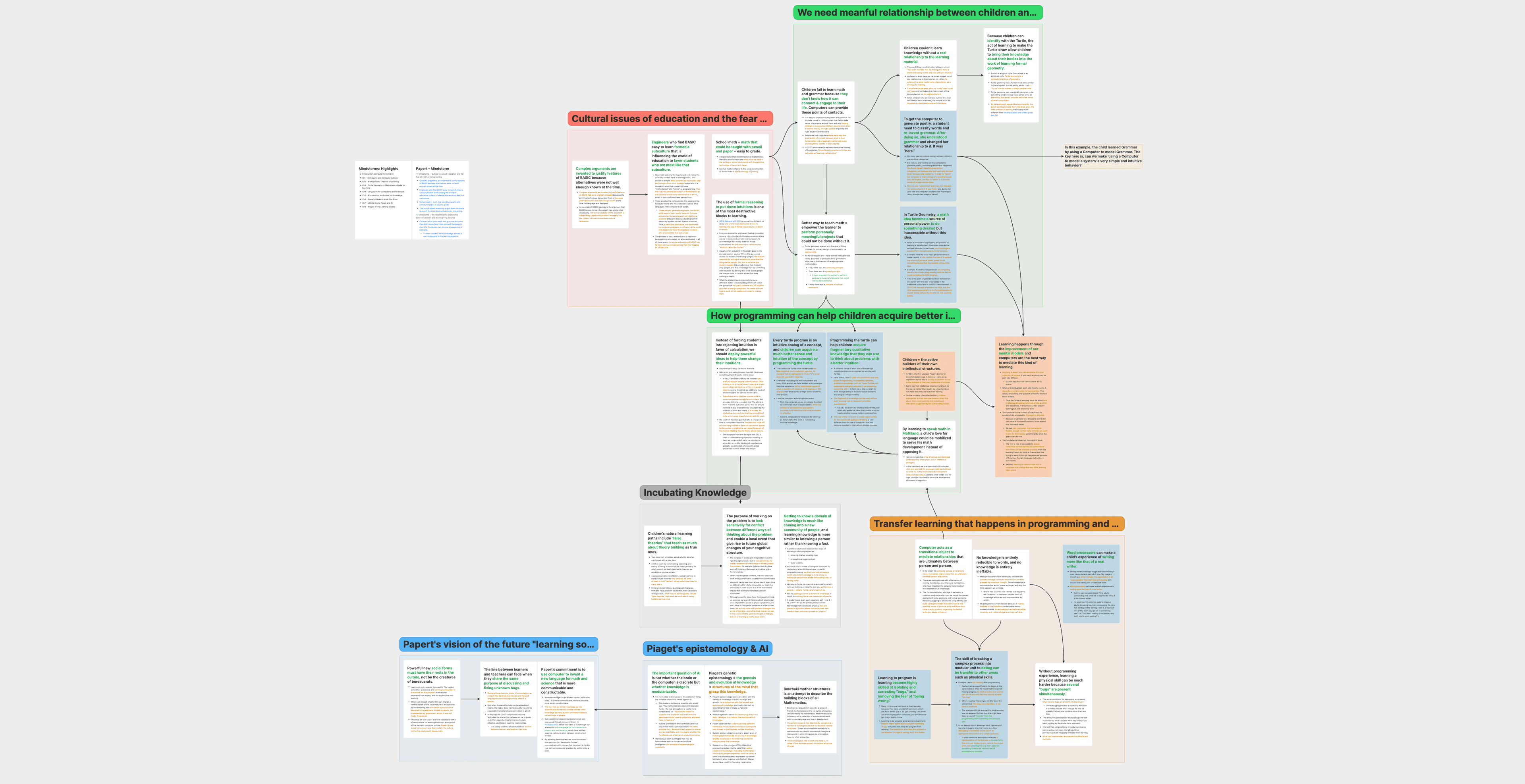
Deepen your understanding on a whiteboard.
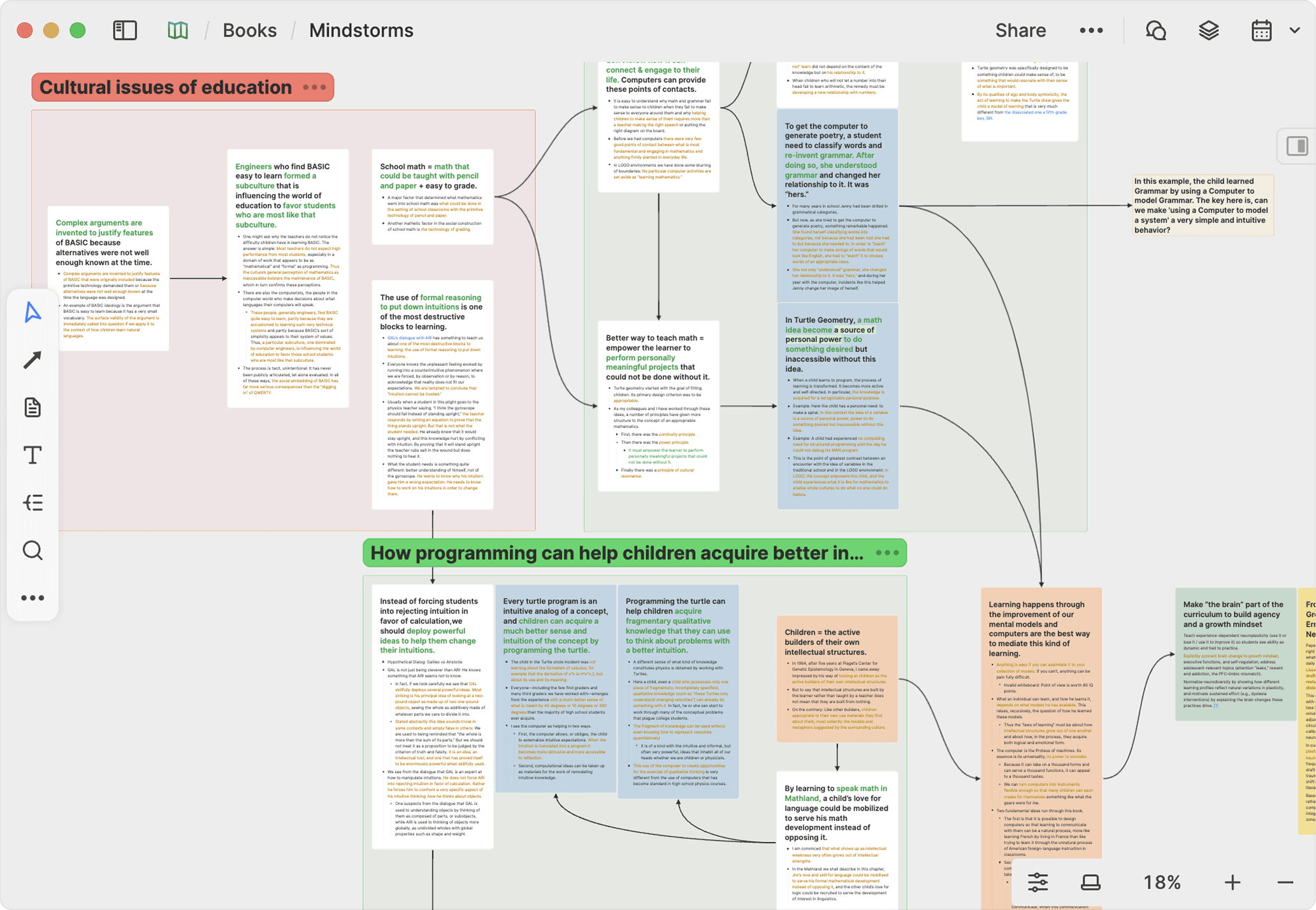
Reading Knowledge Interface Screenshot

Explore what people are making

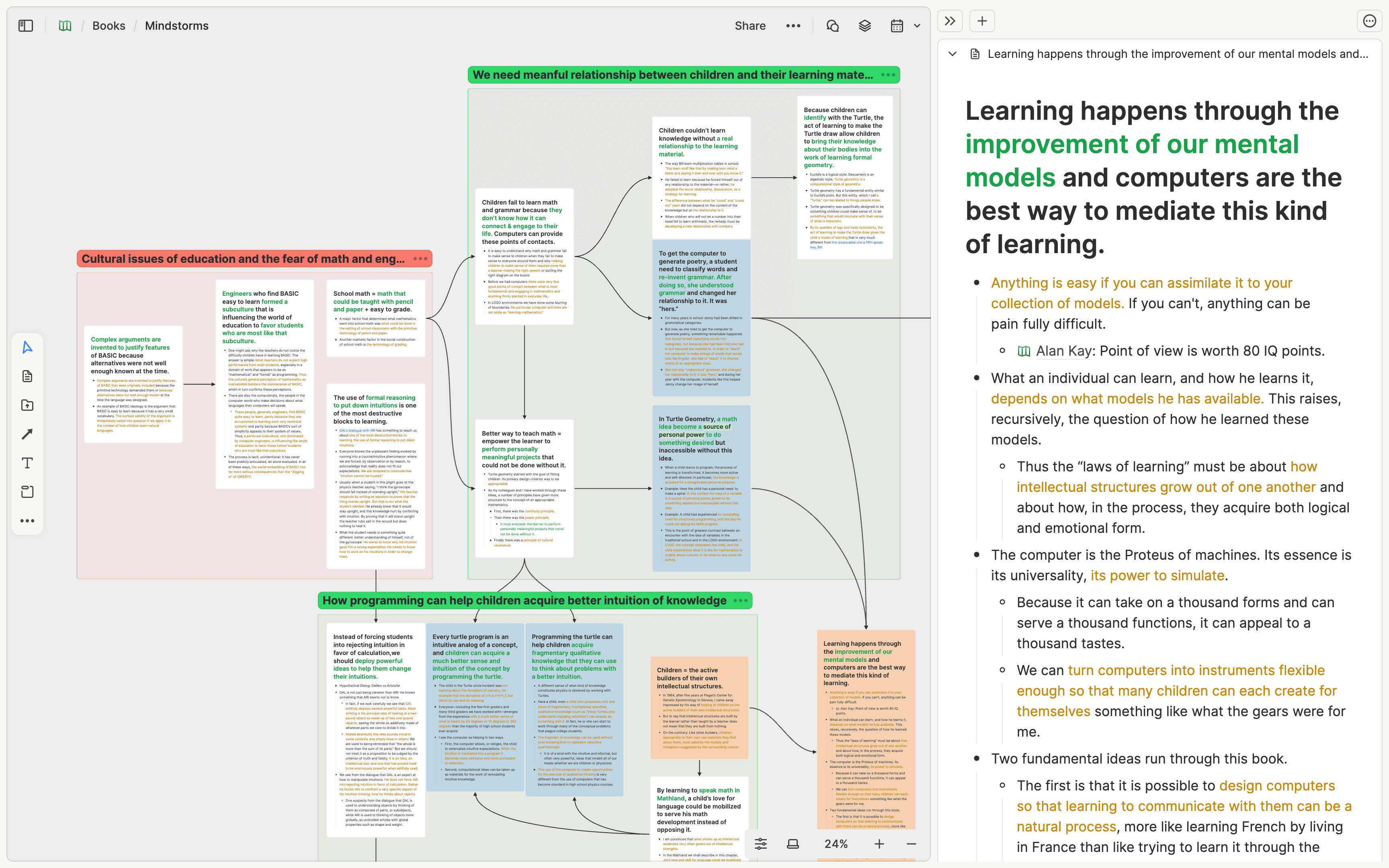
Reading Notes: Mindstorms

Books

Reading Notes: Mindstorms

Mindstorms by Seymour Papert shows how computers can transform learning by letting children explore and create through programming, making education playful and discovery-driven.

Alan
Alan

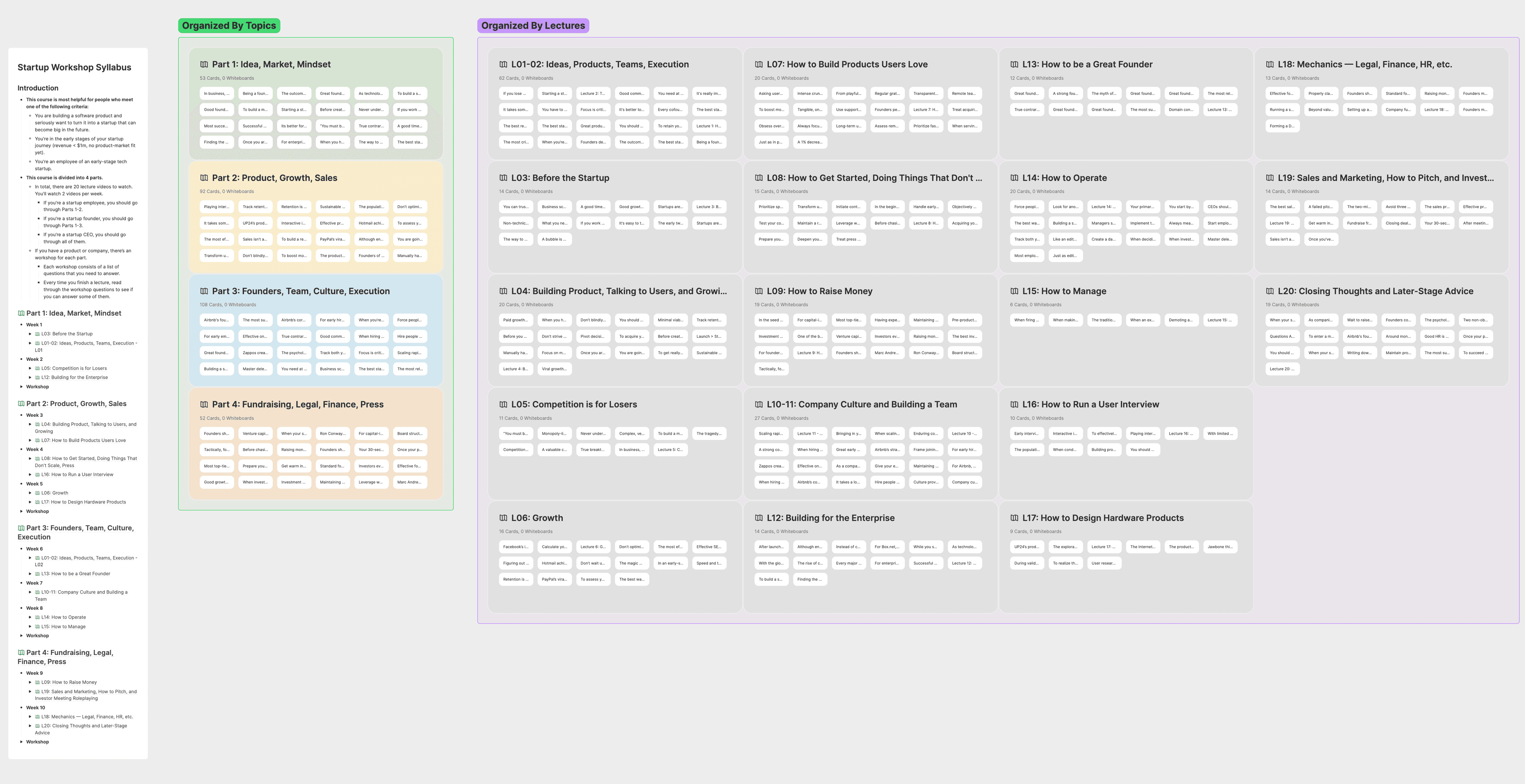
How to Start a Startup

Courses

How to Start a Startup

Everything from Y Combinator’s 2014 Stanford startup course distilled into core ideas.

Alan
Alan

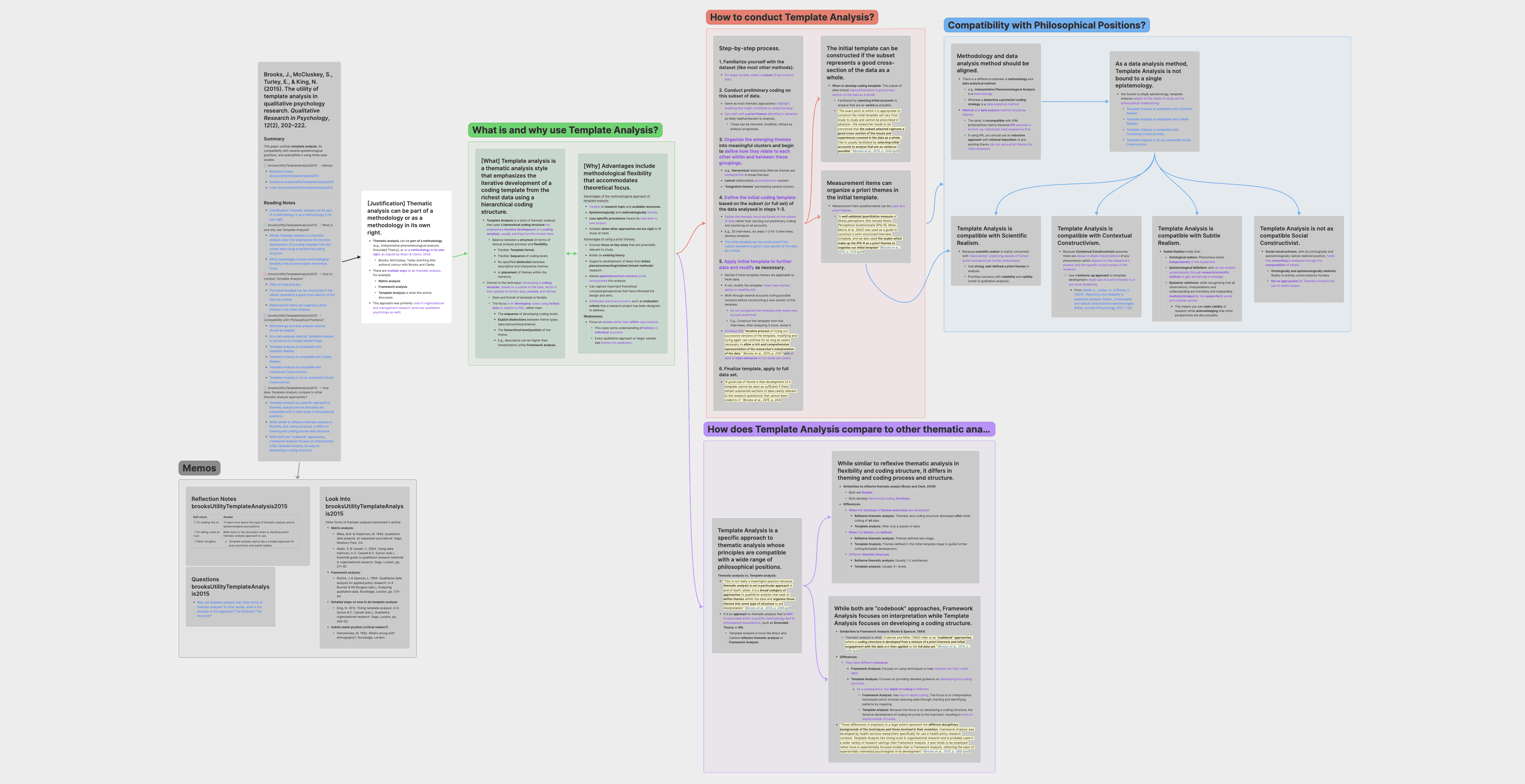
The utility of template analysis in qualitative psychology research

Research

The utility of template analysis in qualitative psychology research

In this methodology paper, Brooks et al. (2015) outline template analysis: a type of thematic analysis in psychology research.
Michael

Michael